
4 C's of Diamonds
The 4Cs, Cut, Color, Clarity, and Carat Weight, set the global standard for assessing a diamond’s true quality. They not only help you understand what makes your diamond unique, but also provide a precise and consistent way to evaluate its characteristics. Choosing a diamond is deeply personal, but measuring its value should be grounded in accuracy and expertise.
Diamond Color
When most people imagine a diamond, they picture one with little to no hue. Often when we talk about diamond color, we are actually talking about the absence of color.
As subtle as color distinction may be, color variations from the most obvious to subdued can drastically alter diamond quality and price.
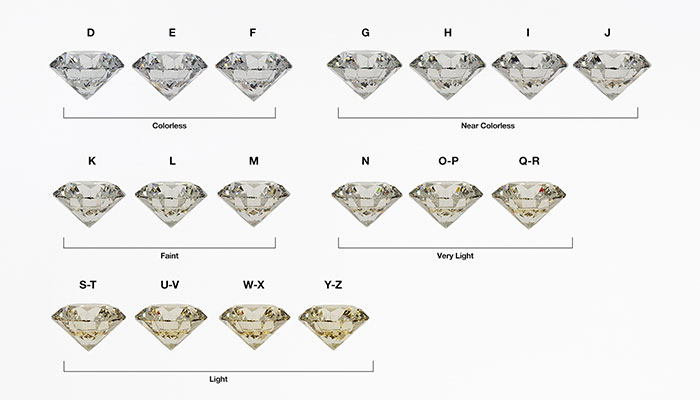
Diamonds actually come in a variety of hues, from colorless to yellow, gray, brown and nearly every shade of the rainbow. Luckily, diamond color isn’t a matter of opinion. Proper color evaluation is a matter of expertise.
The correct way to evaluate diamond color is in precise conditions, under controlled lighting, where stones are compared to masterstones with established color grades.
Once properly evaluated, color is documented based on the GIA D-to-Z Color Scale. From D for colorless to Z for light.

Clarity
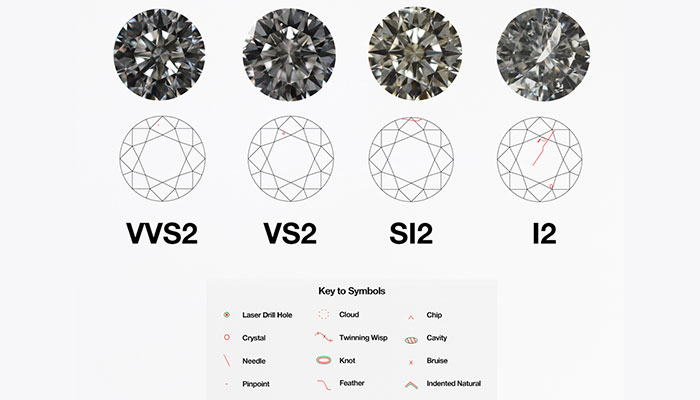
Every diamond is unique. Formed by extreme heat and pressure deep within the earth, it isn’t uncommon for diamonds to contain birthmarks. These clarity characteristics are created when small crystals are trapped in the diamond. As they grow, pressure and stress can cause inclusions and blemishes – sometimes only visible under a microscope.
The clarity of a diamond is based on the size, location, visibility and number of inclusions or blemishes.
Internal and surface reaching characteristics are called inclusions.
External features are called blemishes.
Precise clarity grading is the secret to accurately evaluating a diamond. It is essential when buying a diamond to secure an accurate assessment.
Cut
The cut of a diamond is a question of craftsmanship.
When you hear words like Brightness, Scintillation and Fire, they describe how masterfully a diamond is cut.
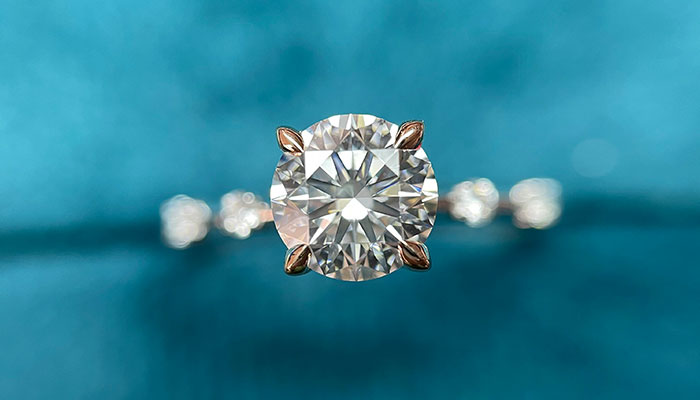
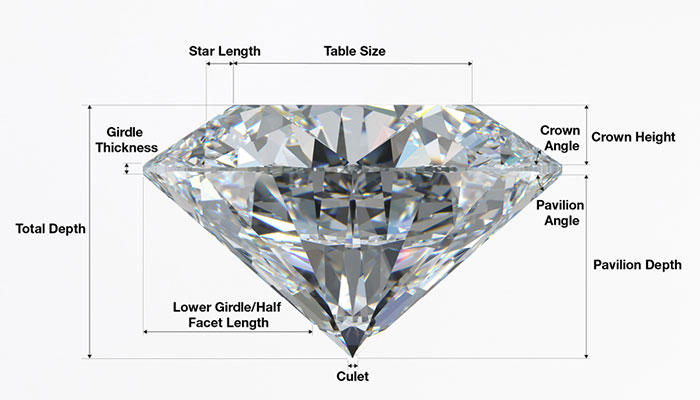
A diamond’s cut refers to how it interacts with light.While a term like oval would refer to the shape, or outline of a diamond, cut also describes the overall design of a diamond, including the arrangement and proportions of the diamond’s facets.
Diamond cut grades are only given to round brilliant cut diamonds because they are the only cut that have standardized facets.
All other shapes are referred to as fancy shapes, which includes marquise, emerald, pear, oval, hearts and even triangles.
Proportions impact the face-up appearance, allure and attractiveness of diamonds. There are many components to consider when assessing the overall cut quality of a round brilliant diamond, one of which is the individual’s preference. Each grade range represents a range of proportion sets, so there is plenty of room for personal preference within a preferred grade range.
There is a nearly unlimited combination of proportions possible, and all of them impact the interaction with light, and ultimately how attractive the diamond appears.
Carat Weight
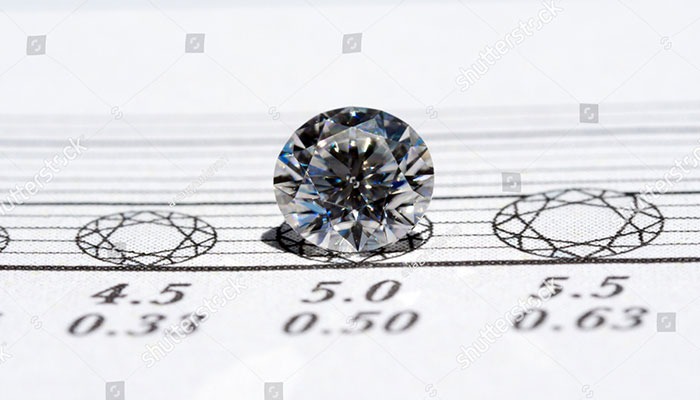
Carat measures weight, not size. A metric carat is defined as 200 milligrams. Each carat is subdivided into 100 points, allowing for measurement to the hundredth decimal place. Carat weight can be measured to the thousandth decimal place for rounding purposes.
The term carat weight comes from carob seeds and has been in use since the 1500s. Early gem traders used to use small uniform seeds to counterweight their scales. Today a carat is a standard milligram measurement of weight, recognized and used globally.
Certain carat weights are considered to be magic sizes for their desirability – 1.00 carat, 1.50 carats, and 2.00 carats. Although it is difficult to visually distinguish a 0.99 carat diamond from a 1.00 carat, the price difference can be significant.